Despite the controversy that has surrounded it since its inception, the Tahoe Regional Planning Agency has been the most effective funding funnel that Lake Tahoe environmental projects have ever seen. Hundreds of millions of dollars in environmental restoration work has been brought to the Tahoe Basin through Tahoe’s unique, bi-state planning organization.
Recently, however, the agency has been under fire like never before. A bill introduced in the Nevada legislature threatens to pull out of the agency if certain significant changes are not made to the way the agency operates. Just days ago, the bill passed the Nevada legislature, and it now awaits the governor’s signature to become law.
For background on the controversy surrounding the TRPA, and details on the Nevada bill that threatens to pull out of the agency by 2015, visit these links:
http://www.moonshineink.com/articles.php/0/2355
http://www.tahoedailytribune.com/article/20110607/NEWS/110609908/1056&parentprofile=1056
Do you work in environmental restoration, water monitoring or regulation at Lake Tahoe? What would the dissolution of the TRPA mean for your business? What are your opinions about Lake Tahoe’s environmental future without a bi-state planning agency?
To share your thoughts, look us up on Facebook and post your comments on our page.

Western Environmental Testing Laboratory
SPARKS OFFICE
475 E. Greg St, Suite 119
Sparks, NV 89431
Monday – Friday (8:00 am – 6:00 pm)
(775) 355-0202 – Phone
(775) 355-0817 – Fax
Lake Tahoe snowmelt floods water sampling labs, hydrologists with work
A web of agencies and scientists work day and night each spring to monitor the aquatic health of one of North America’s most majestic alpine lakes
In the world of water quality monitoring, there is perhaps no more majestic setting or no more intense industry epicenter than Lake Tahoe.
Twenty-two miles long, more than 1,500 feet deep — and surrounded by vacation homes, ski resorts, casinos and lodges — Tahoe is the perfect mix of jaw-dropping, crystalline natural treasure and highway- and home-ringed recreation Mecca that has fueled an intense, long-term web of water quality monitoring programs to gauge the lake’s aquatic health.
Over the span of more than 50 years, scientists have deployed all throughout the year, all across the lake, to gauge sediment loading, nutrient concentrations and water clarity.
But one time of year — when the mountains of snow that ring that lake begin to slowly succumb to the spring’s long days and warm sun — brings of a flood of water quality monitoring work to sampling labs, scientists, non-profit groups and regulators.
The few weeks when spring runoff intensifies — swelling streams and filling the lake with fresh snowmelt — is one of the most critical annual cycles for the clarity of the lake. It is then that agencies can gauge if BMPs (Best Management Practices) are filtering road grime and sediment from construction sites, driveways and roadways. It is then that the effects of the millions of dollars that are regularly invested in catch basins, filtration ponds, and stream and wetland restoration are calculated.
Hydrologists, volunteers and laboratories are flooded with work, literally working day and night to pinpoint the effect of stormwater drainage on one of the world’s most studied bodies of water.
“If [runoff peaks] at 12 o’ clock at night on Christmas day, you go out a monitor then because you don’t want to miss that. Often you are out there in the middle of the night or on weekends,” said John Reuter, associate director of U.C. Davis’s Tahoe Environmental Research Center.
While the waters of Lake Tahoe have been monitored since 1958, agencies have only recently been examining the precise effects of stormwater drainage on Lake Tahoe’s water quality. In 2003, in conjunction with the EPA-mandated Total Maximum Daily Load program, agencies began sampling 16 stormwater sites around the lake. The results confirmed that 70 percent of the fine particles that end up clouding Lake Tahoe’s clarity are coming from urban sites.
Lake Tahoe’s three pollutants of concern — Phosphorous, Nitrogen and fine sediment — are tested and gauged by agency and private labs in the region. Phosphorous and nitrogen stimulate algae growth in the lake, which clouds the lake’s clarity, and sediment that is five times less thick than a human hair, gets suspended in the water, also impairing Tahoe’s famed crystalline waters.
Laboratories like nearby Sparks, Nev.-based WETLAB brace for the flood of laboratory work that each spring runoff season brings.
WETLAB’s state-of-the-art lab was built in 2006 to accommodate the increasing monitoring workload of water analysis from nearby agencies, mining regulators and environmental non-profits. The lab’s business, built on all types of regulatory compliance and environmental restoration work — from Lake Tahoe water testing to environmental testing around mining sites — has boomed in the past year. WETLAB has grown revenue by nearly 30 percent in the last year and hired over 11 full- and part-time employees.
“WETLAB braces for spring each year, knowing that snowmelt means our busy season is here,” said Michelle Sherven, president of WETLAB. “We have even added services, like a dedicated shuttle between our lab and Lake Tahoe, to help busy agencies and non-profit complete important water tests on time during the tense runoff months.”
The precision of the water quality testing is incredibly important as the results guide heavy federal, state and local investment in the environmental future of the lake.
Some of the fixes to the stormwater pollutants that run off of roads, driveways and roofs are simple and common — street sweeping to catch sediment before it is washed into the lake or filtration basins. But when dealing with very fine sediment and minute particles that wash swiftly from shoreline urban areas into the lake, some unique, cutting-edge solutions to Lake Tahoe’s stormwater pollution are being considered, said Reuter.
Ideas like a “pump-and-treat” system — where stormwater is pumped uphill to a man-made filtration area or a natural watershed where the sediment can slowly filter out of the water before it reaches the lake — are being talked about.
Whatever direction the efforts to maintain and restore Lake Tahoe’s famed water clarity take, springtime will continue to be a critical season for scientists, regulators and laboratories to gauge the condition of one of the nation’s most treasured natural wonders.

Western Environmental Testing Laboratory – WETLAB would like to introduce our newest employee. Bruce Trotter has joined WETLAB as our new Laboratory Manager. Bruce has over 23 years of experience in increasing roles within the laboratory at several companies. His experience is enhanced by his Bachelor’s degree in Biological Conservation and his Master’s in Biology.
As Laboratory Manager, Bruce is responsible for the overall leadership of the laboratory department and the laboratory staff. Bruce will lead our efforts in these areas:
- Plan and implement the overall policies, procedures and services for the laboratory department.
- Ensure effective and efficient departmental operations, including quality control and compliance adherence.
- Organize and direct daily activities of the laboratory and is responsible for supervising the laboratory personnel.
- Work with product development teams to manage new product development.
WETLAB is excited about Bruce’s arrival and look forward to developing a stronger laboratory product. If you have any questions or comments for Bruce you may stop by the Sparks location at 475 E. Greg St., Suite 119 Sparks, NV 89431, call him directly at (775) 200-9884 or email to brucet@wetlaboratory.com.
Natural resources are important for the livelihood and survival of populations. One of the most important resources is water, and to be even more specific clean water. The distribution of water serves many purposes, from aquatic ecosystems, domestic use to commercial and industrial use. Clean and safe drinking water can be monitored through microbiological testing. At WETLAB – Western Environmental Testing Laboratory we are proud to offer four certified microbiology analyses and two non-compliance tests. We are certified in Nevada and California to analyze Presence/Absence (P/A), Quanti-tray, Fecal Coliform, and Heterotrophic Plate Count (HPC). The two non-compliance tests we offer are tests to determine Iron Related Bacteria and Sulfate Reducing Bacteria. WETLAB is continuously evolving each department and strives to offer quality data for clients and we encourage method development by researching new tests in order to meet our client needs.
This post is provided to help clients better understand the microbiology analyses at WETLAB. Each test will be described in detail with regards to what we are testing for, what type of sample matrices can be analyzed for certain tests, brief description of the analyses and the hold times for each test (please note there are two different hold times for Quanti-tray). The definition that we follow at WETLAB for sample hold time is the time from sample collection to when analysis MUST begin.
For more information on microbiology analysis, please refer to Standard Methods, Part 9000, Methods 9222 and 9223.
Bacteria Sample Bottle, Volume and Sample Integrity
- Plastic, sterile bottle
- Sample bottle contains sodium thiosulfate.
- Fill to 100 mL line.
- Chill to 2-6o C.
- Cleanliness is required!
SM 9223 B
Presence/Absence (P/A)
Laboratory Hold time (HT)
Sample Matrix
- This test is recommended for the analysis of potable drinking water and fresh source waters
Biology Background
- The scope of this test is to analyze for the presence or absence of Total Coliform bacteria and Escherichia Coli. Total Coliform bacteria are abundant in the environment and are easily identified in the laboratory. While these bacteria may not be pathogenic they are used as “indicator bacteria,” for the sanitation of drinking water. If Total Coliform bacteria are present, there is a chance that E.Coli could also be present. Some types of E.Coli can be found in the guts of living organisms as beneficial co-factors in the daily health of that individual. Because E.Coli is found in the gut, the purpose of testing for it is to determine the possibility of fecal contamination, which is used as an indicator for the sanitation of a water source.
Laboratory Analysis
- Tests for Total Coliform and E. coli only.
- Strictly a qualitative result is obtained.
- Used almost exclusively for drinking water.
- 24 hour incubation.
- Incubation temperature, 35.0 + 0.5 oC
- Analysis performed in sample bottle.
- Commercially available chromogenic substrate (ONPG)-known as “Colilert” is used.
- Colilert is used to detect the enzyme b-D-galactosidase, which is produced by total coliform.
- Total coliform detection produces a yellow color.
- Colilert is used to detect the enzyme b-glucuronidase, which is produced by E. coli.
- E. coli detection produces a fluorescent product when viewed under long-wavelength UV light.
SM 9223 B
Quanti-tray (MPN)
Laboratory Hold time (HT)
- Quanti-tray = 30 Hour HT for Drinking water/Source water
- Quanti-tray = 6 Hour HT for Wastewater samples
Sample Matrix
- This test is recommended for the analysis of potable drinking water, fresh source water or wastewaters
Biology Background
- The scope of this test is to analyze for a “most probable number” index of the number of Total Coliform bacteria and Escherichia Coli, present in the sample.. Total Coliform bacteria are abundant in the environment and are easily identified in the laboratory. While these bacteria may not be pathogenic they are used as “indicator bacteria,” for the sanitation of drinking water. If Total Coliform bacteria are present, there is a chance that E.Coli could also be present. Some types of E.Coli can be found in the guts of living organisms as beneficial co-factors in the daily health of that individual. Because E.Coli is found in the gut, the purpose of testing for it is to determine the possibility of fecal contamination, which is used as an indicator for the sanitation of the water source.
Laboratory Analysis
- Tests for Total Coliform and E. coli only.
- Quantitative result is obtained.
- Most commonly used for source water.
- 24 hour incubation.
- Incubation temperature, 35.0 + 0.5 oC
- Uses Colilert just like presence/absence.
- Sample poured into analysis tray, then incubated.
- Count yellow/fluorescent wells in tray, this produces MPN-Most Probable Number result.
SM 9222 D
Fecal Coliform
Laboratory Hold time (HT)
- Fecal Coliform = 8 Hour HT
Sample Matrix
- This test is recommended for the analysis source water, wastewaters and sludge’s.
Biology Background
- The scope of this test is to analyze a direct count of colony forming units of fecal coliform. Fecal coliform can originate in feces (e.g. E.Coli) or non-fecal origin, such as plant materials and paper mill effluents examples of bacteria are Enterobacter, Klebsiella, Citrobacter. The assay is intended to detect E. Coli as an indicator organism for fecal contamination.
Laboratory Analysis
- Tests for fecal contamination in water.
- Quantitative result is obtained.
- Most commonly used for waste water and surface water.
- 24 hour incubation in water bath.
- Incubation temperature, 44.5. + 0.2 oC
- Sample is filtered (0.45 mm), microorganisms collect on filter and grow due to media used in petri dish.
- Count blue colonies.
SM 9215 B / SimPlate
HETEROTROPHIC PLATE COUNT (HPC)
Laboratory Hold time (HT)
Sample Matrix
- This test is recommended for the analysis of potable drinking water, fresh source water or wastewaters.
Biology Background
- Heterotrophic bacteria, must consume carbon sources for energy and growth. They are found prevalent in the environment as decomposing bacteria as well as being normal flora of the human body. Current research is investigating the use of Heterotrophic bacteria testing for similar purposes as P/A and Fecal Coliform, to evaluate the composition of the water, using Heterotrophic bacteria as the “indicator” organism for possible contamination in water.
Laboratory Analysis
- Tests for Heterotrophic bacteria
- Quantitative result is obtained.
- Most commonly used for drinking water.
- 48 hour incubation.
- Incubation temperature, 35.0 + 0.5 oC
- Uses IDEXX’s Multiple Enzyme Technology media.
- Sample poured into analysis tray, then incubated.
- Count blue fluorescence, this produces MPN-Most Probable Number result.
SM 9240 B
Iron Related Bacteria (IRB)
SM 9240 C
Sulfate Reducing Bacteria (SRB)
Laboratory Hold time (HT)
- IRB/SRB = WETLAB would prefer to use a hold time of 30 Hours
Sample Matrix
- This test is recommended for the analysis of treated water, distribution systems and water used in for industrial use, such as cooling and boiler waters.
Biology Background
- The scope of these tests are very similar, hence the reason they have been grouped together. The metabolic processes of Iron Bacteria and Sulfur Bacteria chemically change the constituents they are associated with. The metabolic wastes can be bothersome because they can form slimes that clog pipelines or affect the aesthetic properties of water.
Laboratory Analysis
- Tests for either Iron Related Bacteria or Sulfate Reducing Bacteria
- Strictly a qualitative result is obtained.
- Most commonly used for water used for industrial and distribution systems.
- 8 Day incubation.
- Incubation temperature, 20-25oC
- Uses BARTTM test kit for IRB or SRB analysis
- Sample poured into analysis tray, then incubated.
- Visually inspect for reactions of presence/absence.
Michelle Sherven is the owner/operator of WETLAB – Western Environmental Testing Laboratory.
WETLAB is a company that has shown tremendous growth over the past year. Michelle took this company from a small start-up to a well established business with overflowing clientele and an increase in revenue and hiring. WETLAB’s revenue increased 29% over the past year, showing enough promise for Michelle to add 4 new full time employees and 7 part time employees. WETLAB started with a total of seven employees. As any entrepreneur knows, creating jobs in a “down” economy is a feat in itself, yet Michelle comfortably made the decision to add to her team because she not only could, but had to. In addition to adding team members, WETLAB was able to expand their working space and equipment list.
WETLAB purchased a new building to conduct business in, adding 11,000 sq ft to their offices and labs. WETLAB also added additional office spaces outside the Reno/Sparks area, purchasing a location in Elko. Along with the extra space, WETLAB’s finances were so stable that Michelle added several new pieces of cutting edge technology testing equipment to the labs, making WETLAB one of the most innovative businesses in their field today. WETLAB solidified that reputation for being on top of their industry by certifying four new test methods to properly provide the scientific data in their water quality tests that governments, mines, environmental restoration organizations and more use on a regular basis to make important development decisions.
Want to talk expansion? WETLAB’s services, sales, and marketing went from being a one state gig to covering a majority of the West Coast in 2010, expanding to California, Idaho, Utah, and Colorado. Michelle now has the team, locations, and resources to provide the most innovative water quality testing to whoever her clients may be and wherever those clients are located.
Michelle’s focus on community well being also contributes to her professional notoriety, both for her and WETLAB as a company. Michelle successfully implemented a paperless billing system for in house client reports, receivables and payables systems. Being in the field she is, environmental standards rate high on Michelle’s priority list, and she’s striving to switch as much of her business as possible to a paperless system. She also strives to keep her lab under a full, 100% recycling program, not letting anything go to waste, from tools and toss away equipment to her team’s lunch leftovers.
WETLAB also gives back to the community by volunteering at the Northern Nevada Food Bank, packaging food to go out to needy families. As a dedicated volunteer group, WETLAB was nominated as one of the top companies that volunteer at the food bank.
As a business and community leader, Michelle takes pride in the fact that she puts the well being of her employees, partners, surroundings, and company first. Her top notch standards ensure that her practices are going to stick around for decades to come. And her revenue figures are impressive for a female in a typically male dominated industry.
High standards go hand-in-hand with owning and operating an Environmental Testing Laboratory. Michelle’s ability to maintain her high standards are reflected in the growth and popularity of her lab. WETLAB is known for their precise analytics and high standard of customer service. This offering a uniquely client-oriented lab environment.
Michelle is a type of person that knows immediately what attribute is the most influential in regard to the success of WETLAB. Based on her several years as a business owner and entrepreneur, Michelle has discovered that at the very top of the list is the distinguishing quality of integrity. Michelle believes that integrity is at the helm of her company. Michelle keeps integrity present throughout the deepest layers of her company and not just at its surface. She wants integrity to be the heart and soul of the company’s culture in order to run a company that succeeds, and not company that falters.
As a wife and mother of two, Michelle’s continued commitment to her family and company has always amazed me. She has very strong determination to be successful as she have proven this determination through her ability to maintain harmony through her personal and business life. Without this ability I am not sure any entrepreneur would survive.
Michelle is not only committed to her friends, family and company but she has created a new standard for how companies should represent themselves throughout the community.
A great example that comes to mind is WETLAB’s ongoing volunteering efforts at the Food Bank of Northern Nevada (FBNN). The WETLAB staff volunteers their entire evening once a month to the FBNN packaging food.
On January 11th, 2011 The Nevada Division of Environmental Protection, Bureau of Mining Regulation and Reclamation (BMRR) issued a statement clarifying the acceptable methods for the analysis of Weak Acid Dissociable, or “WAD”, cyanide. The statement listed two acceptable methods: ASTM D2036-082 and SM 4500CN I.
Keep in mind this concerns only compliance monitoring samples that are being reported to BMRR. The issued statement doesn’t cover any sample that is not for compliance, or is being reported to any other agency.
Both acceptable methods are manual distillation methods that use a weak acid (glacial acetic acid) to break up easily dissociated cyanide complexes, capture the free cyanide in solution, and then analyze the solution using a few different techniques. These two methods have long been thought to be the most reliable techniques for the quantification of cyanide in waters. BMRR stated that only data obtained using one of these two methods would be acceptable for compliance monitoring.
Western Environmental Testing Laboratory (WETLAB) has been using SM4500CN I for the analysis of WAD cyanide for many years and is currently certified by the State of Nevada, Bureau of Water Quality Planning. Just like any method or technique that WETLAB wishes to use for compliance monitoring sample analysis, we have gone through a rigorous certification program that includes an on-site audit and the analysis of “blind” QC samples.
Over the last decade new techniques have been developed for the analysis of the easily dissociated cyanide complexes that WETLAB hopes become acceptable for BMRR reporting. One specific method is known as Flow Injection Ligand Exchange or F.I.L.E. cyanide. WETLAB is already certified and equipped to use this more efficient and environmentally sound testing method, which would provide clients with quicker turn-around time for results. Should BMRR choose to accept data generated from this technique, WETLAB will contact clients to inform them of our wish to change methodologies.
As always, if you have any questions regarding the information contained in this blog, don’t hesitate to call (775) 355-0202.

One of the national epicenters of water quality monitoring, just minutes away from the WETLAB offices in Sparks, Nevada, is gearing up for even more analysis. Lake Tahoe is known around the world as one of the world’s clearest large alpine lakes — and federal, state and local efforts are all concentrated on restoring and preserving the lake’s astounding clarity intact.
In late November, the regional water board that governs the Tahoe Basin approved an aggressive plan to reduce the amount of fine sediment, phosphorous, and nitrogen entering the lake, which are some of the main culprits behind the lake’s steady clarity decline. Over the next 15 years, up to $1.5 billion could be spent to increase the lake’s clarity from last year’s 68-foot depth, to 80 feet, according to news reports.
For agencies and restoration groups around the lake, the new water quality targets mean more water quality analysis to determine which restoration projects are working and how much sediment, phosphorous, and nitrogen is entering the lake. That analysis and lab work is WETLAB’s specialty. Given the increase in water quality monitoring occurring in Tahoe, WETLAB is reminding agencies and non-profits around Lake Tahoe of WETLAB’s convenient regular sample pick-up and material drop-off service to Lake Tahoe.
A WETLAB employee regularly travels to Lake Tahoe to collect water samples and bring them back to WETLAB’s state-of-the-art Sparks, Nevada laboratory for careful testing and analysis.
A WETLAB representative travels to South Lake Tahoe every Tuesday, and to North Lake Tahoe every Thursday for sample collection and instrument drop-off. WETLAB is also willing to work out other collection days for new and existing clients if possible.
WETLAB is proud to be part of the restoration of one of the nation’s natural wonders.

Modern communication is a complex array of tweets, status updates, pixels and blogs. And more than ever the choices of consumers are influenced by the data streaming through the online universe on sites like Facebook, Twitter and LinkedIn.
In this fast-paced communication landscape, it is easy to be left behind, to lose your connection to consumers, clients and industry peers, and to allow the online conversation to pass you by. We here at WETLAB are not only not being left behind, we are leading the charge into a future of effective digital interaction with our water quality monitoring market.
“Social media and online communication tools are not a flash-in-the-pan trend. They are here to stay, and they are the present and future of how businesses and clients communicate,” said Michelle Sherven, President of WETLAB. “By engaging our market through numerous online media, we are positioning ourselves ahead of the curve in our industry, and ahead of the game in effective and immediate interaction with our consumers.”
WETLAB currently engages consumers and potential clients through Facebook, Twitter, LinkedIn, YouTube, Flickr, an e-mail newsletter campaign using Constant Contact, and a blog. Through our Twitter feed, WETLAB recently doled out up-to-the-minute updates from the 2010 Geothermal Energy Expo in Sacramento in mid October. Through the immediate communication of Twitter, we were able to connect with potential clients at the industry event.
Our YouTube channel displays videos from one of the company’s most recent projects — water quality monitoring for the City of Sparks, Nev. — giving those too busy to read or too bored with a long block of text, an engaging way to experience our water quality monitoring work.
Facebook supplies information to consumers in a more active way than a traditional website, allowing social networking browsers to see the latest news on our company without taking the time to visit our home website.
Through each social media avenue, WETLAB is not just engaging in self-promotion, but informing a targeted group of individuals about a topic they care about.
“The key to social media is to not just talk about yourself, but engage in conversation on interesting subjects and trends in the industry,” said Sherven.
By taking the business savvy that made us a premier water quality monitoring laboratory and applying it to online communications networks, WETLAB has embraced innovative ways to communicate with our customer base. And each connection we make through our targeted digital networks is reaffirmation that online communication translates into good business.

Posted by Ginger Peppard, Business Development Manager
I recently attended a great workshop hosted by Placer County and the Town of Truckee entitled “Stormwater Quality Workshop for the Truckee Area Emphasizing Regulations, BMP’s and Low Impact Development.” The workshop was designed to provide contractors, developers, planners, engineers and inspectors with information needed in order to be in compliance with current storm water and non-storm water discharge requirements. It also addressed current regulations, Best Management Practices (BMPs) for construction sites and an overview of Low Impact Development (LID). For more information about the workshop (or to see when they are going to schedule it again!) or about Placer County’s Stormwater Quality Program, email: stormwater@placer.ca.gov.
Why is stormwater monitoring and quality important?
Stormwater runoff occurs when rain or snowmelt flows over impervious surfaces (such as roads, driveways, buildings, sidewalks and parking lots). These impervious surfaces prevent the water from soaking directly into the ground. Stormwater runoff is a problem because, while the water is traveling over these impervious surfaces, searching for an area to infiltrate, it picks up speed, as well as debris, chemicals, dirt and other pollutants. Because stormwater is not treated (or minimally treated in some areas), those large concentrations of pollutants are then deposited directly into the storm drains, or in many cases, directly into streams, rivers, lakes or wetlands.
These harmful contaminants then come in direct contact with fish and wildlife and pollute the water that many of us depend on for recreation activities and for drinking water. Some of the common pollutants found in stormwater are: motor oil, grease, automotive fluids, pesticides, fertilizers, pet waste, paint, solvents, insecticides and sediment and other large debris such as plastic bags, cigarette butts and bottles and cans. Bacteria and other pathogens are also common contaminants and can create serious health hazards. All of these pollutants have serious hazards, either to humans or to the fish and wildlife that inhabit our local streams, lakes and wetlands.
Here are some things you can do to help prevent stormwater runoff pollution:
- Prevent soil erosion by vegetating bare spots in and around your property. If you have livestock, take all possible steps to prevent overgrazing.
- Pick up after your pet and dispose of waste in a proper waste receptacle.
- Cover piles of Pick up after your pet and dispose of waste in a proper waste receptacle.
loose landscaping materials.
- Do not disturb vegetation or soil around natural waterways. Stick to defined trails while enjoying the outdoors.
- Never dump anything down the storm drains or directly into waterways.
- Dispose of used auto fluids, batteries, solvents, paints and prescription drugs using proper disposal methods. Many of these items have designated drop off or recycling locations.
- Take your car to the car wash instead of washing it in your driveway.
- Use fertilizers, herbicides and pesticides sparingly.
- Don’t over water your lawn.
- If you have a septic tank, have it professionally inspected every 3 years and pumped regularly.
- During construction activities, minimize disturbed areas, stabilize slopes and avoid disturbing natural channels. Also minimize the amount of dirt tracked out of the project site.
For more information from Placer County, or additional information brochures for homeowners, construction, Post-Construction and Business/Industrial, visit Placer County’s website at http://www.placer.ca.gov/Departments/Works/StrmWtr.aspx.
For those of you are aren’t familiar with Snapshot Day, it is a citizen-based water quality monitoring event of the Lake Tahoe and Truckee River Watersheds. Citizen monitoring teams, led by water resource professionals, and composed of community volunteers and students, field-test streams throughout the watershed for dissolved oxygen (DO), conductivity (EC), pH, and temperature. The also collect discrete water samples that are then taken to a laboratory for the analysis of nutrients, sediments and bacteria. Teams will also conduct visual habitat assessments of the sites. Team leaders will help educate the volunteers and students by sharing interesting watershed facts and provide information about how you can improve and protect your watershed.
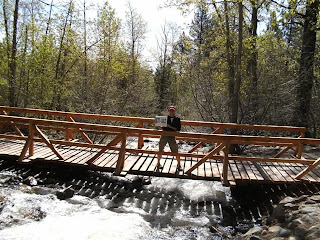
This is a great opportunity to learn about your local watershed and get more involved in a great locally driven environmental event. Also, the data collected on this day helps provide a “snapshot” of water quality and stream conditions all throughout the watershed.
For more information about Snapshot day, or if you would like to participate next year (either as a team leader or a volunteer), email Mary Kay Reidl at mriedl@ndep.nv.gov.
This year, our Client Services Representative, Brian Wadsworth, participated in Snapshot day!
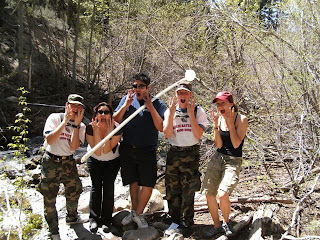
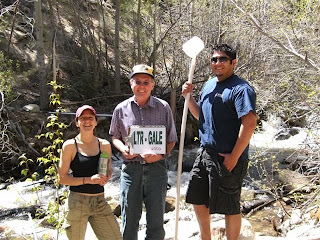

You can also contact Brian at brianw@wetlaboratory.com for more information!
 >
>


