Posted by Ginger Peppard, Business Development Manager
I recently attended a great workshop hosted by Placer County and the Town of Truckee entitled “Stormwater Quality Workshop for the Truckee Area Emphasizing Regulations, BMP’s and Low Impact Development.” The workshop was designed to provide contractors, developers, planners, engineers and inspectors with information needed in order to be in compliance with current storm water and non-storm water discharge requirements. It also addressed current regulations, Best Management Practices (BMPs) for construction sites and an overview of Low Impact Development (LID). For more information about the workshop (or to see when they are going to schedule it again!) or about Placer County’s Stormwater Quality Program, email: stormwater@placer.ca.gov.
Why is stormwater monitoring and quality important?
Stormwater runoff occurs when rain or snowmelt flows over impervious surfaces (such as roads, driveways, buildings, sidewalks and parking lots). These impervious surfaces prevent the water from soaking directly into the ground. Stormwater runoff is a problem because, while the water is traveling over these impervious surfaces, searching for an area to infiltrate, it picks up speed, as well as debris, chemicals, dirt and other pollutants. Because stormwater is not treated (or minimally treated in some areas), those large concentrations of pollutants are then deposited directly into the storm drains, or in many cases, directly into streams, rivers, lakes or wetlands.
These harmful contaminants then come in direct contact with fish and wildlife and pollute the water that many of us depend on for recreation activities and for drinking water. Some of the common pollutants found in stormwater are: motor oil, grease, automotive fluids, pesticides, fertilizers, pet waste, paint, solvents, insecticides and sediment and other large debris such as plastic bags, cigarette butts and bottles and cans. Bacteria and other pathogens are also common contaminants and can create serious health hazards. All of these pollutants have serious hazards, either to humans or to the fish and wildlife that inhabit our local streams, lakes and wetlands.
Here are some things you can do to help prevent stormwater runoff pollution:
- Prevent soil erosion by vegetating bare spots in and around your property. If you have livestock, take all possible steps to prevent overgrazing.
- Pick up after your pet and dispose of waste in a proper waste receptacle.
- Cover piles of Pick up after your pet and dispose of waste in a proper waste receptacle.
loose landscaping materials.
- Do not disturb vegetation or soil around natural waterways. Stick to defined trails while enjoying the outdoors.
- Never dump anything down the storm drains or directly into waterways.
- Dispose of used auto fluids, batteries, solvents, paints and prescription drugs using proper disposal methods. Many of these items have designated drop off or recycling locations.
- Take your car to the car wash instead of washing it in your driveway.
- Use fertilizers, herbicides and pesticides sparingly.
- Don’t over water your lawn.
- If you have a septic tank, have it professionally inspected every 3 years and pumped regularly.
- During construction activities, minimize disturbed areas, stabilize slopes and avoid disturbing natural channels. Also minimize the amount of dirt tracked out of the project site.
For more information from Placer County, or additional information brochures for homeowners, construction, Post-Construction and Business/Industrial, visit Placer County’s website at http://www.placer.ca.gov/Departments/Works/StrmWtr.aspx.
For those of you are aren’t familiar with Snapshot Day, it is a citizen-based water quality monitoring event of the Lake Tahoe and Truckee River Watersheds. Citizen monitoring teams, led by water resource professionals, and composed of community volunteers and students, field-test streams throughout the watershed for dissolved oxygen (DO), conductivity (EC), pH, and temperature. The also collect discrete water samples that are then taken to a laboratory for the analysis of nutrients, sediments and bacteria. Teams will also conduct visual habitat assessments of the sites. Team leaders will help educate the volunteers and students by sharing interesting watershed facts and provide information about how you can improve and protect your watershed.
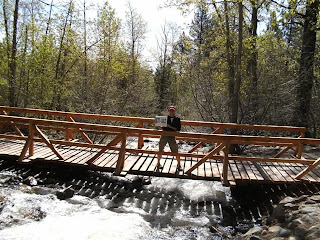
This is a great opportunity to learn about your local watershed and get more involved in a great locally driven environmental event. Also, the data collected on this day helps provide a “snapshot” of water quality and stream conditions all throughout the watershed.
For more information about Snapshot day, or if you would like to participate next year (either as a team leader or a volunteer), email Mary Kay Reidl at mriedl@ndep.nv.gov.
This year, our Client Services Representative, Brian Wadsworth, participated in Snapshot day!
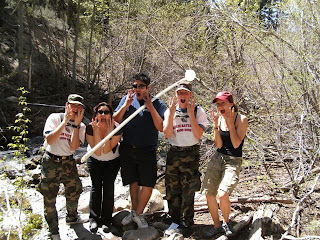
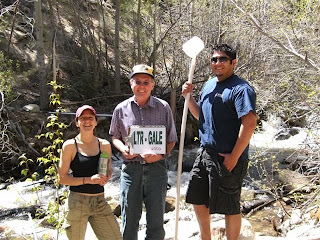

You can also contact Brian at brianw@wetlaboratory.com for more information!
 >
>


